
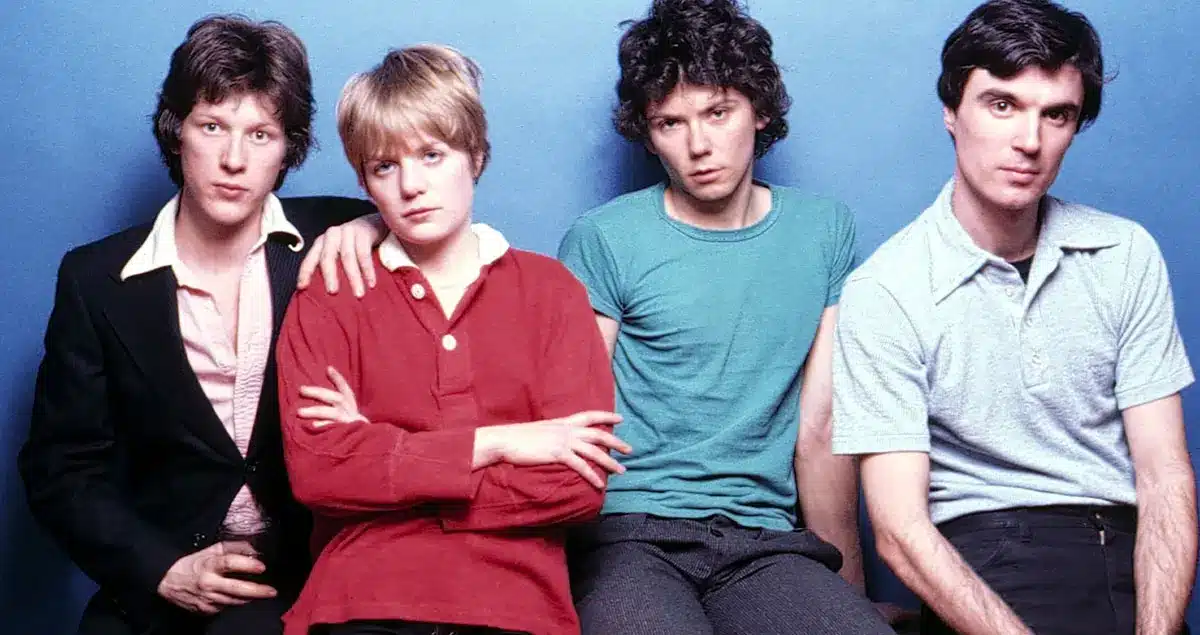
Talking Heads: Anxiety That Learned to Dance
Talking Heads are often remembered as quirky, nervous, or intellectual. Those traits are visible—but they’re symptoms, not the cause. What Talking Heads actually achieved was far more precise:
They translated anxiety into motion.
Instead of collapsing inward, their discomfort moved outward, turning tension into rhythm, thought into groove, and alienation into collective movement.
Talking Heads didn’t escape anxiety.
They choreographed it.
Nervous Energy as Structure
Most rock music treats rhythm as propulsion. Talking Heads treated it as containment. Grooves don’t explode; they loop. Motion doesn’t climax; it persists.
This creates a peculiar effect: the body moves while the mind remains alert. Dancing doesn’t dissolve tension—it sustains it in a manageable form.
The result is music that feels kinetic without being carefree. You move, but you never relax completely.
The Voice as Observation, Not Expression
Vocals in Talking Heads rarely emote in the traditional sense. They narrate, catalog, question. The voice sounds curious, detached, occasionally bewildered—but never cathartic.
This observational stance is crucial. The singer doesn’t feel for the listener. He thinks alongside them.
Emotion emerges indirectly, through accumulation rather than confession.
Repetition Without Comfort
Repetition in Talking Heads’ music isn’t hypnotic—it’s analytical. Patterns repeat to expose themselves, not to soothe. Grooves stay long enough to become familiar, then continue past familiarity into awareness.
You don’t lose yourself in repetition.
You become aware of it.
This self-conscious looping mirrors modern life: routines, systems, habits that persist without resolution.
Community Without Unity
Talking Heads often sound communal, but never unified. Instruments interlock without merging. Each part maintains independence.
This creates collective motion without collective certainty. Everyone moves together, but no one is fully aligned.
It’s an eerily accurate portrait of modern social experience: participation without belonging, movement without shared direction.
Intelligence That Doesn’t Retreat
Unlike many bands that mask intelligence with irony, Talking Heads foreground it—but never weaponize it. Ideas appear as observations, not conclusions. Questions remain open.
This openness keeps the music light without becoming shallow. Thought doesn’t paralyze motion. It coexists with it.
That balance is rare.
Why Talking Heads Still Feels Contemporary
Talking Heads feel current because they describe conditions that intensified rather than resolved: overstimulation, mediated experience, social fragmentation.
They didn’t predict the future.
They identified a rhythm already forming.
By aligning anxiety with groove, they created music that could survive acceleration.
The Core Insight
Talking Heads revealed that anxiety doesn’t need to collapse into despair or explode into chaos. It can be organized, shared, and moved through.
They didn’t make happy music.
They made functional music for uneasy minds.
Final Thought
Talking Heads matter because they proved that thought and motion don’t cancel each other out. You can be anxious and active, uncertain and rhythmic, detached and communal—at the same time.
They didn’t solve anxiety.
They taught it how to move without breaking.
And that lesson keeps dancing forward.