
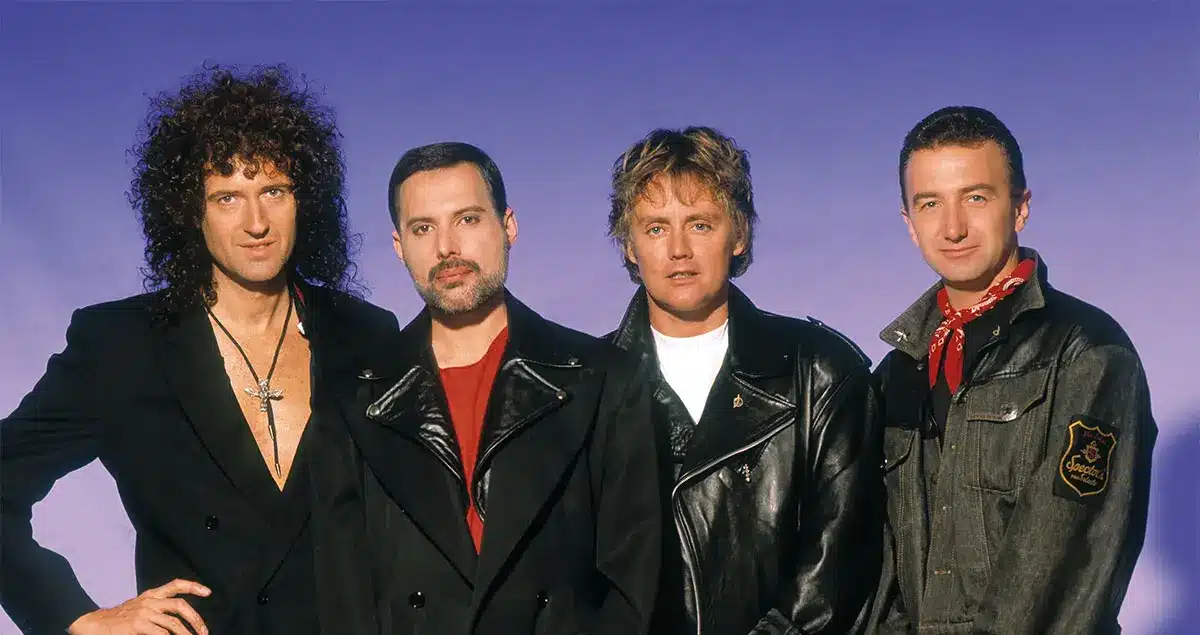
Queen: Composition, Theatricality, and the Expansion of Arena Rock
Quick Facts
Founded: 1970
Origin: London, England
Genres: Rock, Hard Rock, Glam Rock, Arena Rock
Classic Line-Up: Freddie Mercury, Brian May, Roger Taylor, John Deacon
Years Active: 1970–present (with different vocal eras after 1991)
Origin Story – From Smile to Queen
Queen emerged from the remnants of a band called Smile, formed by guitarist Brian May and drummer Roger Taylor. When Smile’s vocalist departed, Freddie Mercury — a friend and admirer of the band — joined and proposed a new direction.
Mercury brought more than vocals. He brought ambition.
He renamed the band Queen, a title designed to be bold, theatrical, and memorable. Bassist John Deacon completed the lineup in 1971.
Unlike many British rock bands of the time, Queen did not anchor themselves strictly to blues or progressive traditions. Their early sound combined layered harmonies, hard rock riffs, and complex arrangements.
Their 1973 self-titled debut showed technical ability but limited commercial impact. It was with their third album that their structural identity became clear.
The Turning Point – Sheer Heart Attack and A Night at the Opera
Sheer Heart Attack (1974) marked their first major breakthrough. The album demonstrated stylistic range — from aggressive rock to theatrical composition.
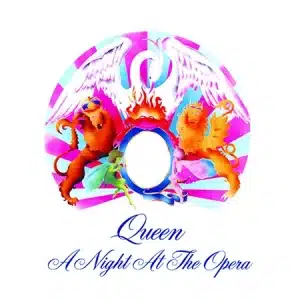
However, their decisive moment arrived in 1975 with A Night at the Opera.
The album was expensive to produce and ambitious in scope. Rather than following conventional rock structures, it incorporated:
-
Multi-layered vocal harmonies
-
Classical-inspired transitions
-
Varied genre experimentation
The band embraced studio technology to build dense arrangements without relying on synthesizers. Brian May’s layered guitar orchestrations functioned as harmonic textures rather than standard riffs.
The album’s success established Queen as leaders of arena-scale rock.
Milestone Album – A Night at the Opera (1975)
A Night at the Opera is widely considered Queen’s defining album.
It balanced theatrical ambition with accessibility. The production was meticulous, with complex overdubs and structured sequencing.
Key characteristics:
-
Operatic vocal sections
-
Dynamic tempo changes
-
Precise instrumental layering
Rather than pursuing raw heaviness like Black Sabbath or speed like Judas Priest, Queen prioritized arrangement and dramatic pacing.
The album demonstrated that rock music could absorb elements of opera, vaudeville, and progressive structure without losing mainstream appeal.
Signature Song – Bohemian Rhapsody
“Bohemian Rhapsody” remains one of the most structurally unconventional songs to achieve global commercial success.
The track is divided into distinct sections:
-
Ballad introduction
-
Operatic middle passage
-
Hard rock segment
-
Reflective coda
There is no traditional chorus.
The production required extensive multi-tracking, particularly in the vocal harmonies. The song challenged radio norms due to its length but became a major hit.
Its success proved that complexity could coexist with mass appeal.
The accompanying promotional video also contributed to the evolution of the music video format.
Stage Presence and Arena Identity
Freddie Mercury’s live performance style became central to Queen’s identity.
He combined vocal range with controlled theatrical movement. Rather than relying solely on instrumental improvisation, Queen focused on audience interaction and structured set pacing.
Their 1985 Live Aid performance is often cited as one of the most effective large-scale rock performances. The band demonstrated command over a massive audience through precision and confidence rather than excess.
Queen’s arena model influenced future stadium-oriented acts.
Internal Stability and Shift
Queen maintained the same core lineup throughout their most productive period — a rarity among major rock bands.
Each member contributed to songwriting:
-
Freddie Mercury favored theatrical composition.
-
Brian May brought layered guitar orchestration.
-
John Deacon contributed bass-driven pop structures.
-
Roger Taylor added rhythm-focused rock elements.
This distribution of creative input contributed to stylistic diversity.
In the 1980s, albums such as The Game and A Kind of Magic incorporated pop and electronic textures. The band adapted to evolving trends without abandoning structural identity.
Freddie Mercury’s death in 1991 marked a defining closure of the original era.
Members
Freddie Mercury – Vocals, Piano
Brian May – Guitar
Roger Taylor – Drums
John Deacon – Bass
Following Mercury’s death, Queen continued with guest vocalists in live settings.
Selected Studio Discography Highlights
Queen (1973)
Sheer Heart Attack (1974)
A Night at the Opera (1975)
A Day at the Races (1976)
News of the World (1977)
The Game (1980)
A Kind of Magic (1986)
Innuendo (1991)
Structural Contribution to Rock
Queen influenced rock music in several ways:
-
Integration of Theatrical Composition
Operatic structures were incorporated into mainstream rock. -
Layered Guitar Orchestration
Brian May’s approach replaced synthesizers with multi-tracked guitar harmonies. -
Arena Performance Model
Audience interaction became structured rather than spontaneous. -
Genre Fluidity
The band navigated hard rock, pop, and progressive influences within cohesive albums.
Unlike purely riff-driven or speed-driven metal bands, Queen’s influence centered on arrangement and performance architecture.
Legacy
Queen’s impact extends beyond rock into global pop culture.
They demonstrated that technical ambition and theatrical presentation could achieve commercial dominance.
Their catalog remains widely consumed across generations, and their live performance standards continue to shape stadium-scale productions.
Queen did not simply expand rock.
They restructured its scale.