
Gorillaz

Gorillaz Avatarların Arkasında Gizlenmedi — Grubu Kendisiyle Değiştirdi

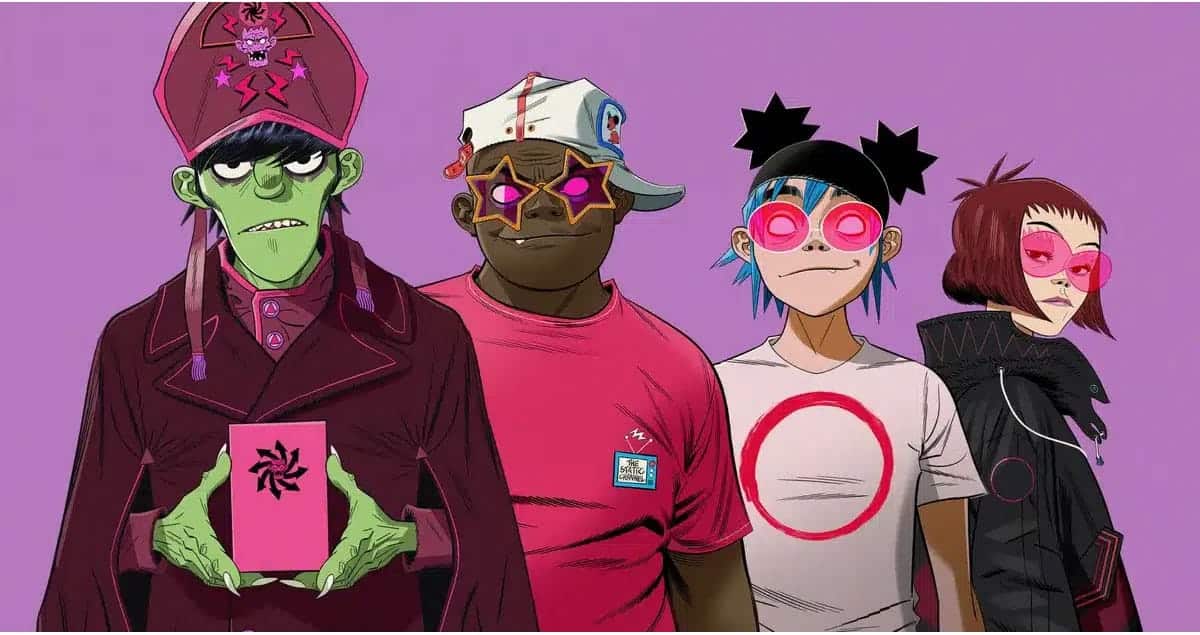
Gorillaz genellikle bir şeye indirgeniyor: “sanaldan bir grup.” Bu çerçeve yapısal kaymayı gözden kaçırıyor. Avatarlar süsleme değildi; onlar altyapıydı.

Gorillaz, geleneksel grubu görünür, sabit bir birim olarak kaldırdı ve onu esnek bir arayüzle değiştirdi. Kimlik modüler hale geldi. Ses genişletilebilir oldu. Süreklilik artık insanlara değil, kavramsal tutarlılığa bağlıydı.

RMU lensi:

Gorillaz grubu bir platform olarak, kişilik olarak değil, ele alıyor.


Merkez Olmadan İşbirliği

Çoğu işbirlikçi proje hala tanınabilir bir çekirdek etrafında döner. Gorillaz döner. Müziği yapılmış gibi hissediliyor, yazılmış gibi değil.

  • Sesler hiyerarşi olmadan döner

  • Tarzlar karışmadan bir arada var olur

  • Türler geçer, birleşmez

Bu, uyumun kürasyondan geldiği bir dinleme deneyimi yaratır, kimyadan değil. Grup “birlikte çalmıyor” — ev sahipliği yapıyor.

RMU çerçevesi:

Gorillaz grup kimyasını editoryal mantıkla değiştiriyor.


Tarz Geçiş Olarak, Hedef Olarak Değil

Gorillaz evreninde, türler kimlik değildir. Onlar geçici durumlar.

Hiçbir şey yerleşmez:

  • Sesler ortaya çıkar, sonra geçer

  • Ruh halleri özür dilemeden değişir

  • Estetik tutarlılık kasıtlı olarak dengesizdir

Bu, yenilik için eklektizm değil. Kültürün kendisinin parçalanmış, hızlı hareket eden ve sürekli yeniden bağlamlandırılan bir dünya olduğunu yansıtır.

RMU içgörüsü:

Gorillaz, kültür hareket halindeyken, saf müzik arayışında değil gibi ses çıkarıyor.


Duygu Mesafe Üzerinden Filtrelenmiş

Sık sık duygusal tonlara rağmen, Gorillaz nadiren samimi hissedilir. Aracılık katmanları — animasyon, işbirliği, prodüksiyon — duygusal tamponlar olarak işlev görür.

Temaları hissedersiniz, itirafı değil. Duygu vardır, ama uzaktan. Bu mesafe aşırı özdeşleşmeyi engellerken, yine de yankı bulmayı sağlar.

RMU çerçevesi:

Gorillaz, duyguyu kişisel hissettirmeden güvenli hale getiriyor.


Neden Gorillaz Sadece Modern Dönemde Var Olabilirdi

Gorillaz şunlara bağımlıdır:

  • Dijital kimlik

  • Çapraz tür akıcılığı

  • Kapı bekçiliği olmadan kültürel örnekleme

Nostaljik veya ileriye dönük değiller — şu an odaklılar. Yapıları sürekli girdi, sürekli remixleme, sürekli değişim varsayıyor.

Geleneksel gruplar kalıcılığı arar. Gorillaz akış varsayıyor.


Miras: Grubu Bir Çerçeve Olarak

Gorillaz bir türü yeniden tanımlamadı.
Onlar bir grubun ne olabileceğini yeniden tanımladı.

Şunları normalleştirdiler:

  • Kurgusal kimliği işlevsel bir araç olarak

  • İşbirliğini varsayılan, istisna değil

  • Müziği bir ekosistem olarak, bir ifade değil

Etkileri daha az işitsel, daha çok mimari.


RMU Kapanış Düşüncesi

Gorillaz, temel bir modern soruya yanıt veriyor:

Ya kimlik isteğe bağlı olsaydı — ve tutarlılık biçimden ziyade niyetten gelseydi?

Sanat ile yapaylık arasındaki gerilimi çözmüyorlar.
Onlar onun içinde çalışıyorlar.

Ve bunu yaparken, kolektif müzik yapımının geleceğini sessizce işaret ediyorlar —
katılacağınız bir grup değil, gireceğiniz bir alan olarak.

Gorillaz

Gorillaz n’ont pas caché derrière des avatars — ils ont remplacé le groupe lui-même

Gorillaz sont souvent réduits à un gimmick : un « groupe virtuel ». Cette présentation manque le changement structurel. Les avatars n’étaient pas une décoration ; ils étaient l’infrastructure.

Gorillaz ont retiré le groupe traditionnel en tant qu’unité visible et stable et l’ont remplacé par une interface flexible. L’identité est devenue modulaire. Le son est devenu extensible. La continuité ne dépendait plus des personnes, mais de la cohérence conceptuelle.

Lentille RMU :

Gorillaz considèrent le groupe comme une plateforme, pas une personnalité.


Collaboration sans centre

La plupart des projets collaboratifs gravitent encore autour d’un noyau reconnaissable. Gorillaz ne le font pas. Leur musique semble assemblée plutôt qu’écrite.

  • Les voix tournent sans hiérarchie

  • Les styles coexistent sans se mélanger

  • Les genres passent plutôt que de fusionner

Cela crée une expérience d’écoute où la cohésion provient de la curation, pas de la chimie. Le groupe ne « joue pas ensemble » — il accueille.

Cadre RMU :

Gorillaz remplacent la chimie du groupe par une logique éditoriale.


Style comme transit, pas destination

Dans l’univers de Gorillaz, les genres ne sont pas des identités. Ce sont des états temporaires.

Rien ne se fixe :

  • Les sons apparaissent, puis passent

  • Les humeurs changent sans excuse

  • La cohérence esthétique est intentionnellement instable

Ce n’est pas de l’éclectisme pour la nouveauté. Cela reflète un monde où la culture elle-même est fragmentée, en mouvement rapide et constamment recontextualisée.

Insight RMU :

Gorillaz sonnent comme une culture en mouvement, pas comme une musique cherchant la pureté.


Émotion filtrée par la distance

Malgré des tonalités émotionnelles fréquentes, Gorillaz ne semblent que rarement intimes. Les couches de médiation — animation, collaboration, production — agissent comme des tampons émotionnels.

Vous ressentez des thèmes, pas des confessions. Le sentiment existe, mais à distance. Cette distance empêche une sur-identification tout en permettant une résonance.

Cadre RMU :

Gorillaz rendent le sentiment sûr en ne le laissant jamais paraître personnel.


Pourquoi Gorillaz ne pouvaient exister que dans l’ère moderne

Gorillaz dépendent de :

  • Identité numérique

  • Fluidité entre les genres

  • Échantillonnage culturel sans contrôle d’accès

Ils ne sont ni nostalgiques ni tournés vers l’avenir — ils sont axés sur le présent. Leur structure suppose une entrée constante, un remixage constant, un changement constant.

Les groupes traditionnels recherchent la permanence. Gorillaz supposent le flux.


Héritage : Le groupe comme cadre

Gorillaz n’ont pas redéfini un genre.
Ils ont redéfini ce qu’un groupe peut être.

Ils ont normalisé :

  • Identité fictive comme outil fonctionnel

  • Collaboration comme défaut, pas exception

  • La musique comme un écosystème, pas une déclaration

Leur influence est moins audible qu’architecturale.


Pensée de clôture RMU

Gorillaz répondent à une question moderne fondamentale :

Et si l’identité était optionnelle — et la cohérence venait de l’intention plutôt que de la forme ?

Ils ne résolvent pas la tension entre l’art et l’artifice.
Ils opèrent à l’intérieur.

Et ce faisant, ils signalent discrètement l’avenir de la création musicale collective —
non pas comme un groupe auquel vous adhérez, mais comme un espace que vous entrez.

Gorillaz

Gorillaz Verstopten Zich Niet Achter Avatars — Ze Vervingen De Band Zelf

Gorillaz worden vaak gereduceerd tot een gimmick: een “virtuele band.” Die framing mist de structurele verschuiving. Avatars waren geen decoratie; ze waren infrastructuur.

Gorillaz verwijderden de traditionele band als een zichtbare, stabiele eenheid en vervingen deze door een flexibele interface. Identiteit werd modulair. Geluid werd uitbreidbaar. Continuïteit hing niet langer af van mensen, maar van conceptuele samenhang.

RMU lens:

Gorillaz beschouwen de band als een platform, niet als een persoonlijkheid.


Samenwerking Zonder Centrum

De meeste samenwerkingsprojecten draaien nog steeds om een herkenbare kern. Gorillaz doen dat niet. Hun muziek voelt samengesteld in plaats van geschreven.

  • Stemmen draaien zonder hiërarchie

  • Stijlen bestaan naast elkaar zonder te mengen

  • Genres passeren in plaats van te versmelten

Dit creëert een luisterervaring waarbij samenhang voortkomt uit curatie, niet uit chemie. De band “speelt niet samen” — het host.

RMU framing:

Gorillaz vervangen bandchemie door redactionele logica.


Stijl als Transit, Geen Bestemming

In het universum van Gorillaz zijn genres geen identiteiten. Het zijn tijdelijke toestanden.

Niets vestigt zich:

  • Geluiden verschijnen, en gaan dan verder

  • Stemmingen verschuiven zonder excuses

  • Esthetische consistentie is opzettelijk onstabiel

Dit is geen eclectisme voor de nieuwigheid. Het weerspiegelt een wereld waarin cultuur zelf gefragmenteerd, snel bewegend en voortdurend hercontextualiseerd is.

RMU inzicht:

Gorillaz klinkt als cultuur in beweging, niet als muziek die naar puurheid zoekt.


Emotie Gefilterd Door Afstand

Ondanks frequente emotionele tonen, voelen Gorillaz zelden intiem aan. De mediatie lagen — animatie, samenwerking, productie — fungeren als emotionele buffers.

Je voelt thema’s, geen bekentenis. Sentiment bestaat, maar op armlengte afstand. Deze afstand voorkomt over-identificatie terwijl het toch resonantie toelaat.

RMU framing:

Gorillaz maken voelen veilig door het nooit persoonlijk te laten aanvoelen.


Waarom Gorillaz Alleen in het Moderne Tijdperk Kon Bestaan

Gorillaz zijn afhankelijk van:

  • Digitale identiteit

  • Cross-genre vloeiendheid

  • Culturele sampling zonder poortwachters

Ze zijn niet nostalgisch of toekomstgericht — ze zijn gericht op het heden. Hun structuur gaat uit van constante input, constante remixing, constante verandering.

Traditionele bands zoeken naar permanentie. Gorillaz gaan uit van flux.


Erfenis: De Band als Kader

Gorillaz hebben een genre niet herdefinieerd.
Ze hebben herdefinieerd wat een band kan zijn.

Ze hebben genormaliseerd:

  • Fictieve identiteit als functioneel hulpmiddel

  • Samenwerking als standaard, niet als uitzondering

  • Muziek als een ecosysteem, niet als een statement

Hun invloed is minder hoorbaar dan architectonisch.


RMU Slotgedachte

Gorillaz beantwoorden een fundamentele moderne vraag:

Wat als identiteit optioneel was — en samenhang voortkwam uit intentie in plaats van vorm?

Ze lossen de spanning tussen kunst en kunstmatigheid niet op.
Ze opereren erin.

En daarmee signaleren ze stilletjes de toekomst van collectieve muziekproductie —
niet als een band waar je bij aansluit, maar als een ruimte die je betreedt.

Gorillaz

Gorillaz Didn’t Hide Behind Avatars — They Replaced the Band Itself

Gorillaz are often reduced to a gimmick: a “virtual band.” That framing misses the structural shift. Avatars weren’t decoration; they were infrastructure.

Gorillaz removed the traditional band as a visible, stable unit and replaced it with a flexible interface. Identity became modular. Sound became expandable. Continuity no longer depended on people, but on conceptual coherence.

RMU lens:

Gorillaz treat the band as a platform, not a personality.


Collaboration Without Center

Most collaborative projects still orbit a recognizable core. Gorillaz don’t. Their music feels assembled rather than authored.

  • Voices rotate without hierarchy

  • Styles coexist without blending

  • Genres pass through rather than merge

This creates a listening experience where cohesion comes from curation, not chemistry. The band doesn’t “play together” — it hosts.

RMU framing:

Gorillaz replace band chemistry with editorial logic.


Style as Transit, Not Destination

In Gorillaz’ universe, genres are not identities. They’re temporary states.

Nothing settles:

  • Sounds appear, then move on

  • Moods shift without apology

  • Aesthetic consistency is intentionally unstable

This isn’t eclecticism for novelty. It mirrors a world where culture itself is fragmented, fast-moving, and constantly recontextualized.

RMU insight:

Gorillaz sound like culture in motion, not music seeking purity.


Emotion Filtered Through Distance

Despite frequent emotional tones, Gorillaz rarely feel intimate. The mediation layers — animation, collaboration, production — act as emotional buffers.

You feel themes, not confession. Sentiment exists, but at arm’s length. This distance prevents over-identification while still allowing resonance.

RMU framing:

Gorillaz make feeling safe by never letting it feel personal.


Why Gorillaz Could Only Exist in the Modern Era

Gorillaz depend on:

  • Digital identity

  • Cross-genre fluency

  • Cultural sampling without gatekeeping

They are not nostalgic or forward-looking — they’re present-focused. Their structure assumes constant input, constant remixing, constant change.

Traditional bands seek permanence. Gorillaz assume flux.


Legacy: The Band as Framework

Gorillaz didn’t redefine a genre.
They redefined what a band can be.

They normalized:

  • Fictional identity as functional tool

  • Collaboration as default, not exception

  • Music as an ecosystem, not a statement

Their influence is less audible than architectural.


RMU Closing Thought

Gorillaz answer a foundational modern question:

What if identity was optional — and coherence came from intent instead of form?

They don’t resolve the tension between art and artifice.
They operate inside it.

And in doing so, they quietly signal the future of collective music-making —
not as a band you join, but as a space you enter.

Gorillaz

Gorillaz No Se Escondieron Detrás de Avatares — Reemplazaron a la Banda Misma

Gorillaz a menudo se reducen a un truco: una “banda virtual”. Esa perspectiva pierde el cambio estructural. Los avatares no eran decoración; eran infraestructura.

Gorillaz eliminaron la banda tradicional como una unidad visible y estable y la reemplazaron con una interfaz flexible. La identidad se volvió modular. El sonido se volvió expansible. La continuidad ya no dependía de las personas, sino de coherencia conceptual.

Perspectiva RMU:

Gorillaz tratan a la banda como una plataforma, no como una personalidad.


Colaboración Sin Centro

La mayoría de los proyectos colaborativos aún orbitan un núcleo reconocible. Gorillaz no. Su música se siente ensamblada en lugar de autoría.

  • Las voces rotan sin jerarquía

  • Los estilos coexisten sin fusionarse

  • Los géneros pasan a través en lugar de fusionarse

Esto crea una experiencia de escucha donde la cohesión proviene de la curaduría, no de la química. La banda no “toca junta” — hospeda.

Perspectiva RMU:

Gorillaz reemplazan la química de la banda con lógica editorial.


Estilo como Tránsito, No Destino

En el universo de Gorillaz, los géneros no son identidades. Son estados temporales.

Nada se asienta:

  • Los sonidos aparecen, luego se van

  • Los estados de ánimo cambian sin disculpas

  • La consistencia estética es intencionalmente inestable

Esto no es eclecticismo por novedad. Refleja un mundo donde la cultura misma está fragmentada, en movimiento rápido y constantemente recontextualizada.

Perspectiva RMU:

Gorillaz suenan como cultura en movimiento, no como música que busca pureza.


Emoción Filtrada a Través de la Distancia

A pesar de los tonos emocionales frecuentes, Gorillaz rara vez se sienten íntimos. Las capas de mediación —animación, colaboración, producción— actúan como amortiguadores emocionales.

Sientes temas, no confesiones. El sentimiento existe, pero a distancia. Esta distancia previene la sobreidentificación mientras aún permite la resonancia.

Perspectiva RMU:

Gorillaz hacen que sentir sea seguro al nunca dejar que se sienta personal.


Por Qué Gorillaz Solo Podrían Existir en la Era Moderna

Gorillaz dependen de:

  • Identidad digital

  • Fluidez entre géneros

  • Muestreo cultural sin control de acceso

No son nostálgicos ni miran hacia el futuro — son enfocados en el presente. Su estructura asume entrada constante, remezcla constante, cambio constante.

Las bandas tradicionales buscan permanencia. Gorillaz asumen flujo.


Legado: La Banda como Marco

Gorillaz no redefinieron un género.
Redefinieron lo que una banda puede ser.

Normalizaron:

  • Identidad ficticia como herramienta funcional

  • Colaboración como norma, no como excepción

  • La música como un ecosistema, no como una declaración

Su influencia es menos audible que arquitectónica.


Pensamiento Final de RMU

Gorillaz responden a una pregunta moderna fundamental:

¿Y si la identidad fuera opcional — y la coherencia viniera de la intención en lugar de la forma?

No resuelven la tensión entre arte y artificio.
Operan dentro de ella.

Y al hacerlo, señalan silenciosamente el futuro de la creación musical colectiva —
no como una banda a la que te unes, sino como un espacio que entras.